

Norsewood Shop
Viking Seax 12" Bone Handle
Viking Seax 12" Bone Handle
Couldn't load pickup availability
Blade: Polished hand forged carbon steel
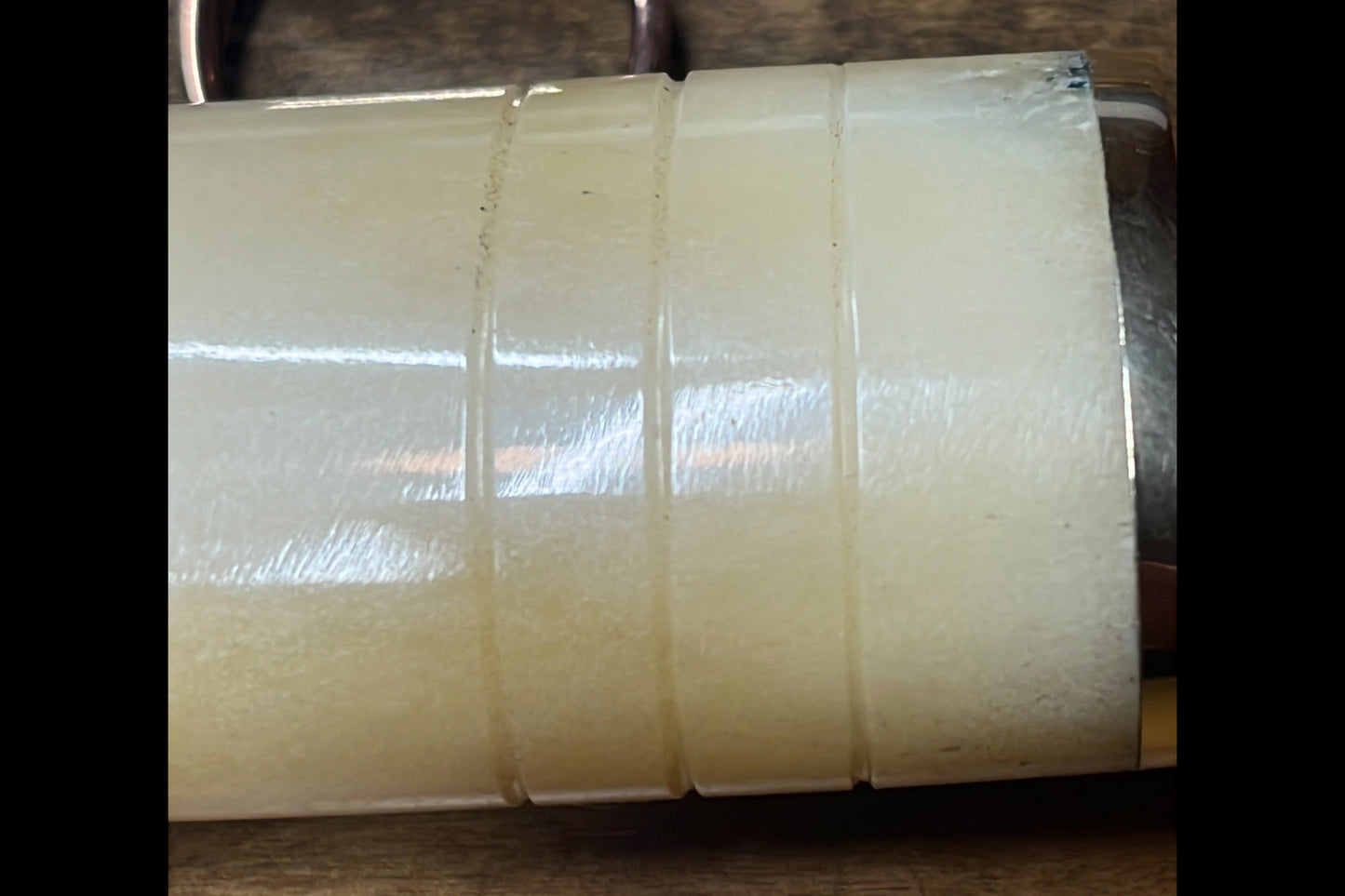
Handle: Bone with hand carvings
Sheath Top grain leather with solid brass reinforcement
About the Viking Seax
The seax is deeply rooted in Scandinavian history and culture. The seax was the battle knife of choice for the Vikings.
A Viking seax is a single-edged knife that was widely used during the Viking Age by the Norse people. It served as both a utility tool and a weapon, making it an essential item in everyday life. Most Vikings would have carried this type of knife into battle as a backup weapon.
The word seax means “knife” or “cutting tool” in Old Norse language. It was typically carried horizontally in a sheath on the belt, allowing for a faster and more efficient draw compared to a vertical carry. The horizontal leather sheaths were often decorated with stamped designs. The sheaths could be reinforced with metal hardware. The exact reason why the knife was carried with the cutting edge facing up is unknown. Historians speculate it may have something to do with the Vikings’ knife fighting technique.
The blade of a seax was longer, thicker, and heavier than most other knives. Rather than having a full tang, the seax featured a pointed tang that was driven into a handle made of wood or bone. It didn’t have a cross guard, giving it a more streamlined and utilitarian design.
In close-quarters combat - especially when there wasn’t enough space to wield an axe - the seax was the ideal weapon. Its heavy blade could deliver powerful blows capable of penetrating an enemy’s armor, making quick and lethal strikes.
In Viking burial sites, seaxes are sometimes found alongside axes and swords, showing they were considered valuable and personal items, possibly even heirlooms.
Your knife is made from carbon steel and requires occasional maintenance. Always have oil on your knife blade. If a tiny rust spot appears, just apply a drop of CLR (readily available in any grocery store) on it, let it sit for a few minutes and then wipe it off.
Keep your leather sheath and cord in good condition by applying leather conditioner, especially after exposure to rain or snow.
About the Vikings
The Viking Age lasted from approximately 780 AD to 1066 AD. During this time, people referred to them as Norsemen or Danes rather than Vikings. The term "Viking" does not appear in any historical texts until centuries later, long after the era had ended.
Vikings lived in what is now Scandinavia (Denmark, Norway, and Sweden). They were master shipbuilders, constructing vessels capable of crossing open seas while also navigating shallow rivers with only a few feet of water.
A unique aspect of Viking society was the relative equality between men and women. Women could own land and were often leaders in battle. Vikings were also remarkable explorers, reaching nearly every corner of the world. Evidence of Viking settlements can be found in many places, including the eastern coast of North America.
Today, Viking culture continues to influence modern life. For instance, Thursday is named after Thor, the Norse god of thunder, and many Christmas traditions have roots in Viking customs.
Share