

Norsewood Shop
Viking Neck Knife 4"
Viking Neck Knife 4"
Couldn't load pickup availability
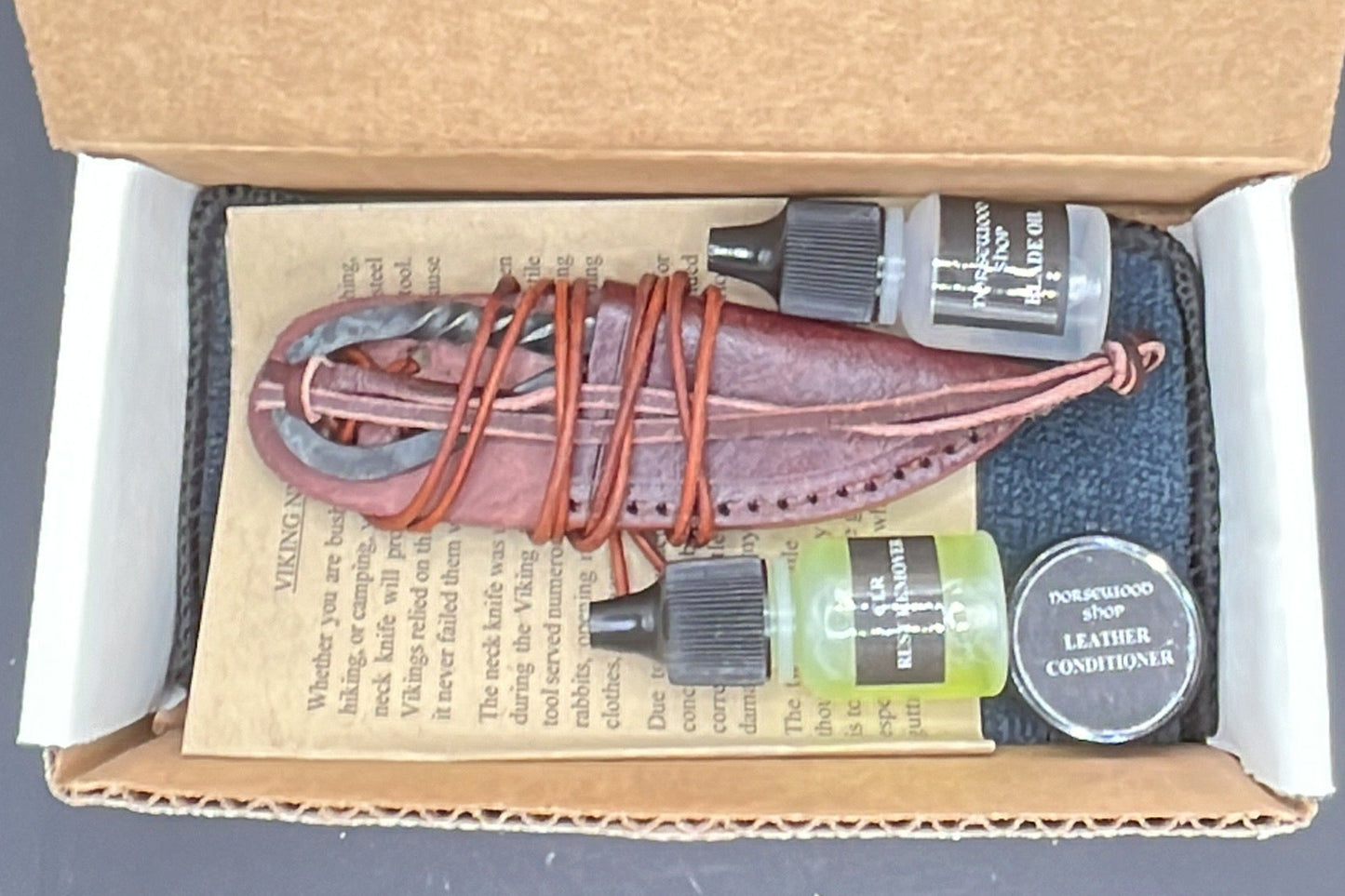
Hand forged carbon steel
Top grain leather sheath
About the Viking neck knife
Whether you are bush crafting, hunting, fishing, hiking, or camping, your hand-forged carbon steel neck knife will prove to be an invaluable tool. Vikings relied on this no-nonsense design because it never failed them when it mattered most.
The neck knife was used by both men and women during the Viking Age. This small but versatile tool served numerous purposes, including skinning rabbits, opening nuts, tending wounds, mending clothes, and many other daily tasks.
Due to its compact size, it was also ideal for concealment as a backup weapon. When wielded correctly, this little knife could inflict serious damage on an enemy.
The twisted handle is not just for decoration - though it is skillfully forged. Its primary purpose is to provide a secure grip, even when wet. This is especially important when skinning small game or gutting fish.
Your knife is made from carbon steel and requires occasional maintenance. Always have oil on your knife blade. If a tiny rust spot appears, just apply a drop of CLR (readily available in any grocery store) on it, let it sit for a few minutes and then wipe it off.
Keep your leather sheath and cord in good condition by applying leather conditioner, especially after exposure to rain or snow.
About the Vikings
The Viking Age lasted from approximately 780 AD to 1066 AD. During this time, people referred to them as Norsemen or Danes rather than Vikings. The term "Viking" does not appear in any historical texts until centuries later, long after the era had ended.
Vikings lived in what is now Scandinavia (Denmark, Norway, and Sweden). They were master shipbuilders, constructing vessels capable of crossing open seas while also navigating shallow rivers with only a few feet of water.
A unique aspect of Viking society was the relative equality between men and women. Women could own land and even serve as battle captains. Vikings were also remarkable explorers, reaching nearly every corner of the world. Evidence of Viking settlements can be found in many places, including the eastern coast of North America.
Today, Viking culture continues to influence modern life. For instance, Thursday is named after Thor, the Norse god of thunder, and many Christmas traditions have roots in Viking customs.
els capable
Share